- Home
- Buying Guide
Buying guide
Choosing a seat belt without guessing
A practical walkthrough of how seat belts differ, what determines whether one will fit your vehicle, and the questions worth settling before you place an order — particularly a bulk one.
01 — Configurations
Understanding the different configurations
Before anything else, establish what you are looking at. Two questions settle it, and both can be answered by looking at the vehicle.
How many anchorage points?
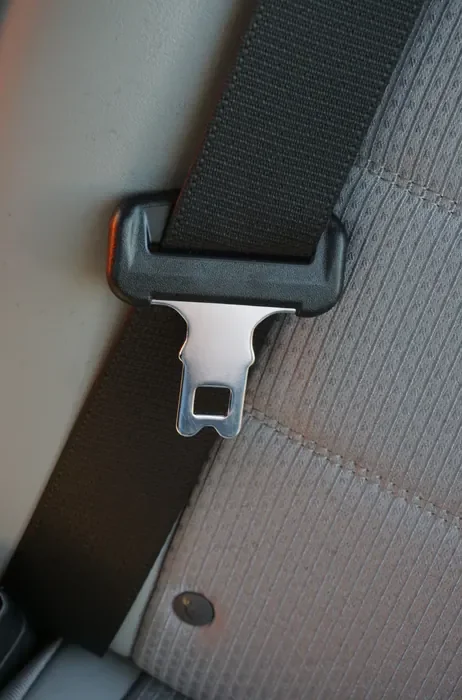
Count where the belt attaches to the vehicle. A two-point or lap belt anchors on each side of the seat and restrains across the pelvis. A three-point belt adds an upper anchorage, usually at or near the B-pillar or built into the seat frame, so the webbing forms both a diagonal shoulder section and a lap section from one continuous strap.
Three-point is the standard arrangement for front and outboard rear positions in modern passenger vehicles. Lap belts persist at centre-rear positions, on bench seating, and in industrial and specialty seats where an upper anchorage is not available.
Does it retract?
Pull the webbing out and let go. If it returns on its own, there is a retractor. If it stays where you left it and is adjusted by hand through a slider, it is static.
Among retractable assemblies, behaviour varies. An emergency locking retractor lets the webbing pay out freely at normal speeds and locks in response to a sharp pull or a change in vehicle motion. An automatic locking retractor ratchets progressively tighter once engaged and releases only when the webbing is allowed to retract fully. Many assemblies switch between the two: pulling the webbing all the way out engages the automatic mode, which is the usual method for securing a child restraint.
This distinction matters more than it looks. Two assemblies can share a mounting pattern and a webbing length while behaving quite differently in use.
Quick identification
- Count the anchorage points: two or three.
- Release the webbing: does it return on its own?
- Pull it fully out: does it ratchet and refuse to pay out?
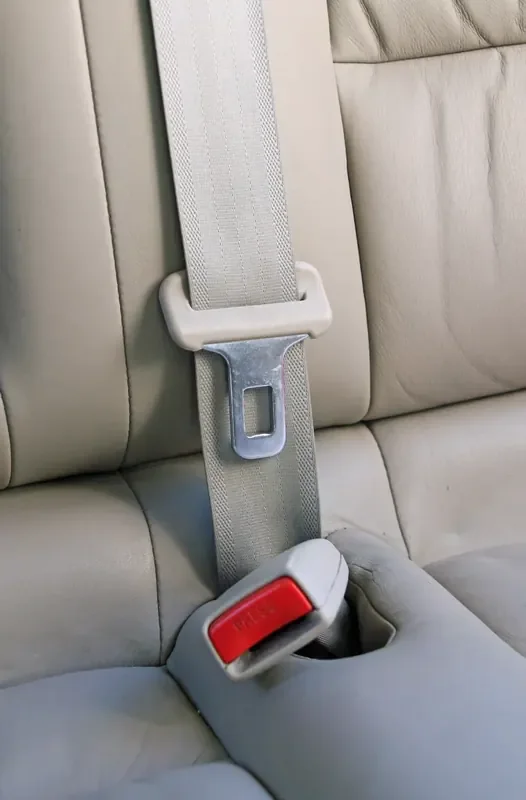
- Look for markings stamped into the latch plate or hardware.
02 — Matching to the vehicle
Choosing according to vehicle type
The configuration narrows the field. The vehicle decides the part.
Passenger cars and SUVs
Generally the most straightforward to match, because these vehicles are well documented and the arrangement is fairly consistent within a model. The trap is assuming one specification covers the whole vehicle: front and rear positions routinely differ in webbing length, retractor mounting and stalk length.
Vans and light commercial vehicles
Cab layouts vary between body builders working from the same base chassis, so the badge on the front is a weaker guide than it is on a car. Find out who completed the vehicle, and expect the restraint arrangement to follow the build rather than the chassis.
Heavy commercial vehicles
Higher seat positions, suspension seat bases and considerably heavier duty cycles. Anchorage arrangements are frequently specific to the cab, and the mounting may attach to the seat frame rather than the vehicle structure.
Bench and multi-occupant seating
Intermediate positions on a bench commonly use lap belts because there is nothing behind the occupant to carry an upper anchorage. Confirm which positions on the bench use which configuration; they are often mixed.
Industrial and utility vehicles
Operator seats are frequently mounted on suspension bases with no surrounding structure. These applications tend to need more adjustment range, more robust hardware and buckle styles suited to gloved operation.
Converted and specialty vehicles
The base vehicle specification stops being a reliable guide once seating has been added or relocated. Whether a fabricated mounting point can carry restraint loads is an engineering question and should be assessed by someone qualified to answer it.
03 — Replacement
Replacement considerations
Most seat belt purchases are replacements, which means there is an existing installation to work from. That is an advantage, provided you use it.
Signs a belt should be taken out of service
- Fraying, cuts, thinning or pulled threads anywhere along the webbing.
- Chemical staining, or heavy fading suggesting prolonged UV exposure.
- Webbing that has gone stiff or lost its flexibility.
- A retractor that will not pull back fully, jams intermittently, or has lost spring tension.
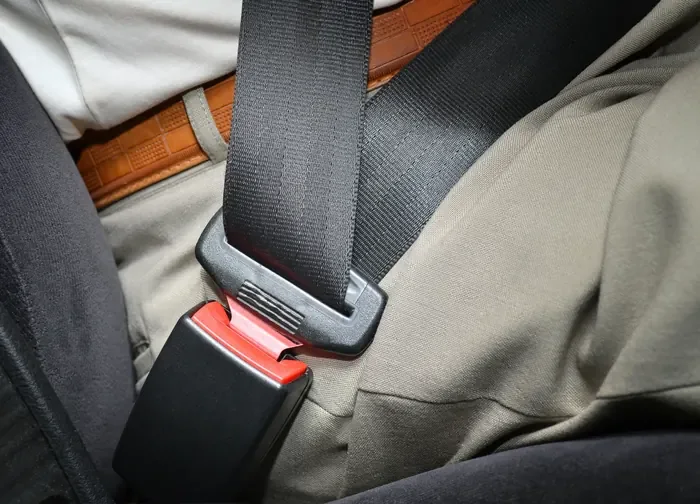
- A buckle that latches inconsistently, requires several attempts, or releases under light pressure.
- Damaged, corroded or distorted anchorage hardware.
- Any belt that may have been loaded in a collision, regardless of how it looks.
Any one of these warrants inspection. Several together generally point to replacing the complete assembly rather than chasing individual components.
Complete assembly or single component?
If one part has failed and everything else is genuinely sound, a component replacement is reasonable and often the better outcome. If the webbing is worn, the retractor is sluggish and the buckle is inconsistent, replacing them one at a time means returning to the same job repeatedly. Condition, not cost, should decide.
Is the existing belt the original?
Worth establishing early, particularly on older vehicles. A belt fitted at some point in the past may not match the factory arrangement, which means matching to what is currently installed could perpetuate an error rather than correct one.
04 — Compatibility
What actually has to match
A belt that bolts in is not necessarily the correct belt. These are the dimensions along which compatibility is decided.
| Criterion | What to check |
|---|---|
| Anchorage positions | Where each mounting point sits relative to the seat, and the angle at which the webbing leaves it. |
| Bolt thread and size | Thread pitch, diameter and length, plus any spacers, shoulder bushes or angled brackets in the original installation. |
| Webbing length | Extended length must reach comfortably around the largest expected occupant without excess the retractor cannot manage. |
| Webbing width | Broadly consistent across passenger applications but not universal. Must run freely through the latch plate slot. |
| Latch plate and receiver | A matched pair. Profile, thickness and locking aperture geometry must correspond exactly — never mix halves. |
| Buckle stalk length and side | The receiver has to sit within reach and clear of the seat cushion and console at full seat travel. |
| Retractor mounting and orientation | Spool angle determines whether webbing feeds cleanly. A retractor that bolts up at the wrong angle will not work properly. |
| Electrical provision | Whether the position carries a buckle-status switch, and the connector type if so. |
05 — Installation
Installation considerations
We supply components; we do not fit them, and this section deliberately stops short of being a fitting instruction. What follows is context for planning the work, not a procedure.
When professional assistance is required
Some situations should go to a qualified automotive technician rather than being handled as a parts-and-spanners job:
- Where anchorage points show corrosion, elongation or any distortion.
- Where a new anchorage point would need to be created, or an existing one relocated.
- Where the vehicle has been converted, rebodied or has had seating added or moved.
- Where the belt being replaced may have been loaded in a collision.
- Where the installation involves pretensioners, airbags or any other pyrotechnic component.
- Where a buckle-status switch has to be integrated with vehicle electronics.
- Any case where you are not certain the replacement is correct for the vehicle.
Points worth planning for
Anchorage hardware is part of the restraint, not an accessory to it — bolts, spacers and bushes should be specified deliberately and torqued to the vehicle manufacturer's figures, not approximated. Trim frequently has to come off to reach a retractor or upper anchorage, and clips have a habit of breaking on removal. And webbing has to run freely along its whole path once fitted: a belt that catches on trim will not perform as intended and will wear prematurely.
06 — Before you buy
Checking suitability before purchase, not after
The cost of confirming fitment beforehand is a few photographs and a conversation. The cost of discovering it afterwards is a vehicle off the road.
- Confirm the configuration. Anchorage point count and retractor behaviour, checked on the vehicle rather than assumed from the model.
- Record the vehicle properly. Make, model, year, variant, and the exact seat position — including which side.
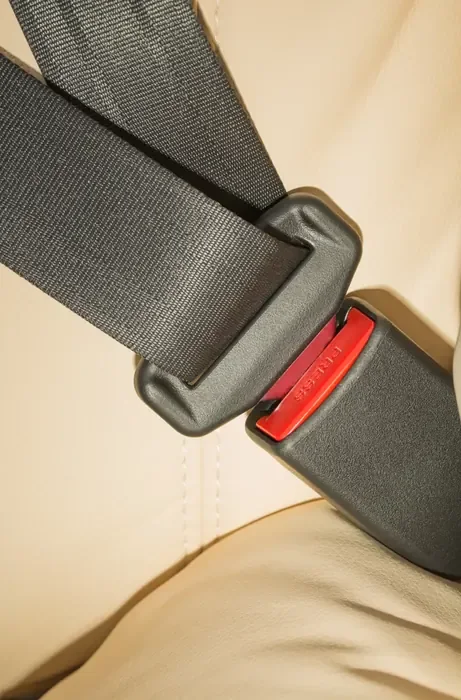
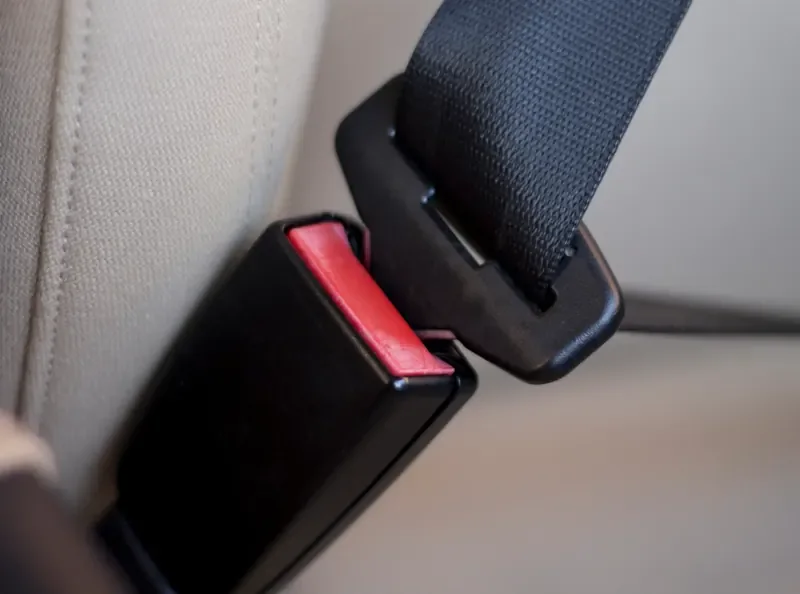
- Photograph everything relevant. Belt at rest, buckle and latch plate, upper and lower anchorages, and any stamped markings or labels.
- Measure what you can. Webbing width, extended length, stalk length. Approximate figures are still useful.
- Inspect the anchorage points. Before ordering, not after the part arrives.
- Ask what is still unconfirmed. A supplier who can tell you what remains uncertain is more useful than one who claims certainty.
07 — Bulk enquiries
Questions to settle before placing a bulk order
Volume changes the problem. These are the questions worth answering before the order is placed rather than after the first delivery arrives.
How many distinct configurations are actually in the fleet?
Vehicle model is not a reliable grouping. Two vehicles of the same model and year can carry different restraint arrangements, particularly if they were completed by different body builders. Survey the fleet by configuration before quoting.
Is this a one-off or a recurring requirement?
A one-off batch and an ongoing programme are sourced differently. If this is the first of several, say so — it changes what should be secured now versus later.
How consistent does the batch need to be?
For most fleet work the answer is completely. Mixed near-equivalents create a maintenance burden that outlives the order, because every later replacement has to identify which variant is fitted.
What is the delivery window?
Lead time affects sourcing route. An honest deadline lets a supplier tell you early whether it is achievable, which is more useful than finding out late.
Who confirms fitment, and against which vehicle?
On a batch order, fitment should be verified against a representative vehicle before the full quantity is committed. Agree who does that and when.
What happens if a specification becomes unavailable?
Worth agreeing in advance. A substitution part-way through a programme reintroduces exactly the inconsistency the batch was meant to avoid.
Still unsure?
Send a photograph and let us work it out
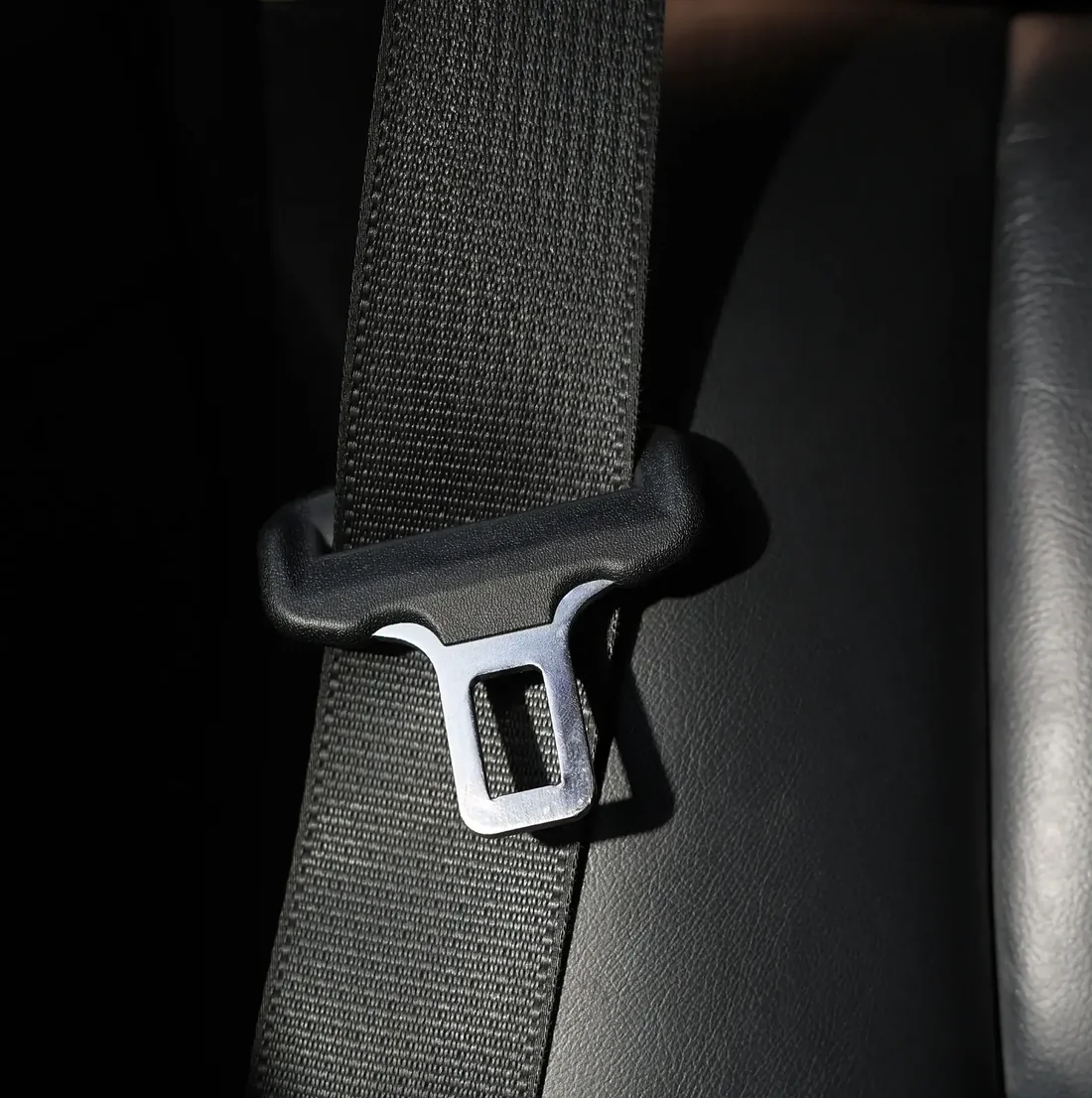
If the guide has not settled it, a clear photograph of the belt and its anchorage points usually will. Send what you have and we will tell you what we can identify and what still needs checking.
Share the vehicle, the seat position and the belt configuration you are replacing or specifying, and we will come back with the options that fit.