Product category 05
Replacement Seat Belt Assemblies
Complete matched assemblies supplied as a set rather than as loose parts — for belts that are worn, frayed, slow to retract, or no longer latching reliably.
Overview
How this category works
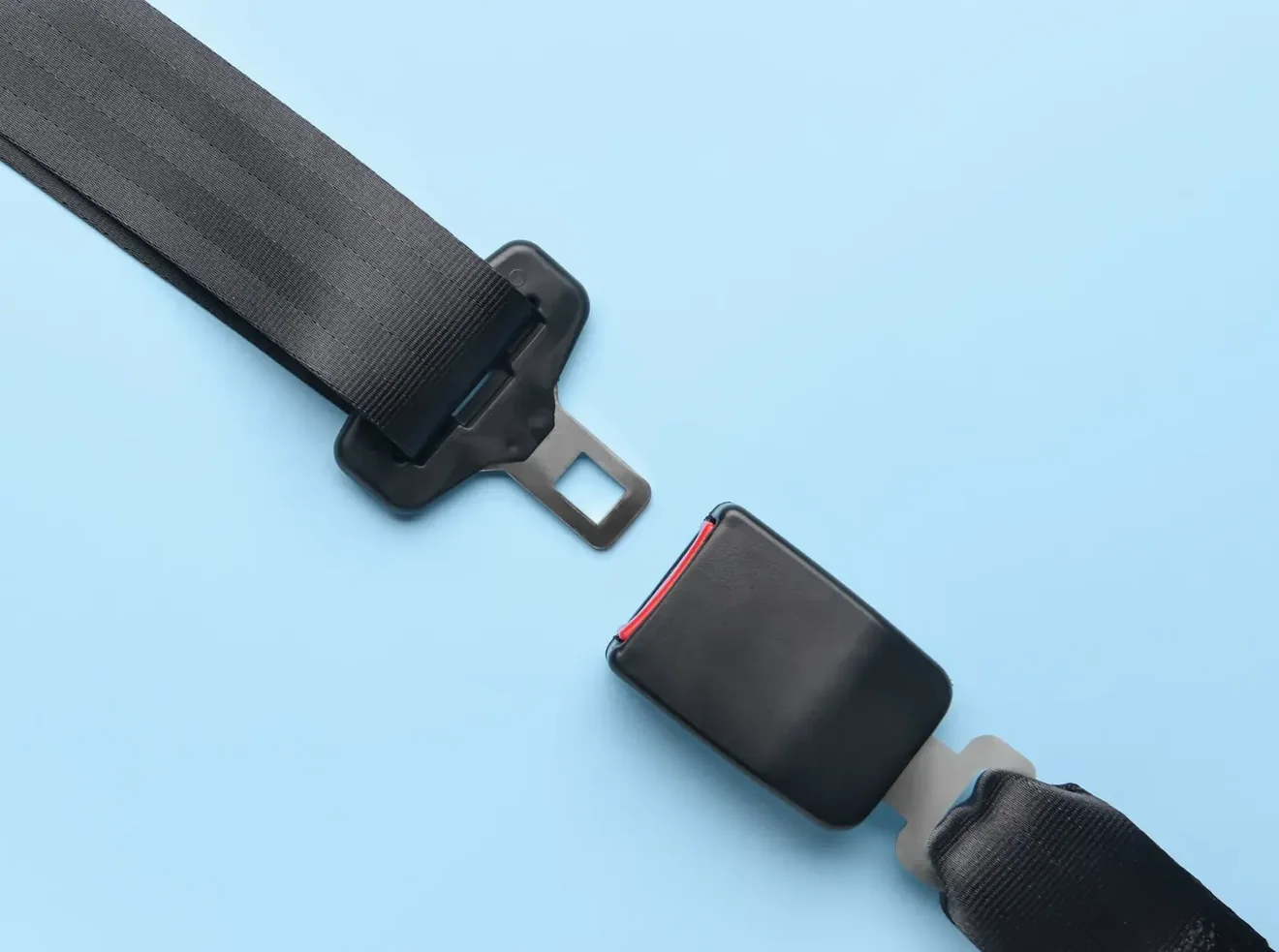
A complete assembly is supplied as a matched set: webbing, retractor where applicable, latch plate, buckle receiver and the associated anchor hardware, all intended to work together. For most replacement work this is the sensible unit to order, because it removes the compatibility questions that arise when parts from different sources are combined.
The alternative — replacing individual components and keeping the rest — is legitimate and often correct where a single part has failed and everything else is sound. The judgement is about condition. If the webbing is in good order and only the buckle has failed, a component replacement makes sense. If the webbing shows wear, the retractor is sluggish and the buckle is inconsistent, replacing them piecemeal means returning to the same job repeatedly.
The indicators that usually prompt a full assembly replacement are worth being specific about. Fraying, cuts or thinning anywhere along the webbing. Chemical staining, or heavy fading that suggests prolonged UV exposure. Webbing that has gone stiff or lost its flexibility. A retractor that will not pull back fully, jams intermittently, or has lost spring tension. A buckle that latches inconsistently or releases under light pressure. Any of these on their own justifies inspection; several together generally point to a complete replacement.
One point that is easy to miss: a belt that has been loaded in a collision should be treated as requiring inspection and, in most cases, replacement — even where it looks undamaged. Load-bearing components can be affected in ways that are not visible, and this is a judgement for a qualified automotive technician rather than a visual check.
Typical applications
Where this category is used
-
Workshop replacement work
Routine repair and servicing, where the task is matching a new assembly to an existing vehicle and its anchorage points.
-
Older vehicles and restoration
Vehicles where the original belts have aged past serviceable condition and the arrangement may predate current fitment conventions.
-
Fleet refresh programmes
Scheduled replacement across multiple vehicles, where consistency of specification across the batch matters as much as the individual part.
-
Post-inspection replacement
Where an inspection has identified a belt as no longer serviceable and a like-for-like assembly is required.
Selection
What decides which one you need
Work through these before ordering. Where you cannot answer one of them, that is exactly the sort of thing to put in an enquiry rather than to estimate.
| Consideration | Why it matters |
|---|---|
| Vehicle and seat position | Make, model, year, variant and the exact seat position. Positions within one vehicle routinely use different assemblies. |
| Whether the existing belt is original | A previously replaced belt may not match the factory arrangement, which changes what you should be matching to. |
| Configuration currently fitted | Three-point or lap; retractable or static. Establish this before anything else. |
| Anchorage point condition | Corrosion, elongation or damage at the mounting points has to be addressed before a new belt is fitted, not afterwards. |
| Hardware included or reused | Whether the original bolts, spacers and trim are being reused, and whether they are still in serviceable condition. |
| Quantity and batch consistency | For fleet work, whether the whole batch must share one specification and over what period it will be supplied. |
Questions
About replacement seat belt assemblies
More questions covering replacement, fitment and bulk supply are answered on the FAQs page.
Look for fraying, cuts or thinning in the webbing, chemical staining or heavy fading, stiffness, a retractor that will not pull back or jams, and a buckle that latches inconsistently. Any of these warrants inspection. A qualified automotive technician should make the final call, particularly if the belt may have been loaded in a collision.
There is no universal rule. Where several belts are of similar age and show similar wear, replacing them together often makes practical sense and keeps the specification consistent. Where one has failed for a specific reason and the others are sound, replacing that one is reasonable.
Often, but it depends heavily on the vehicle and what is available. Older vehicles are also where the existing installation is least likely to be original. Send photographs of the belt, the anchorage points and any markings, and we will tell you honestly what we can and cannot source.
Related categories
Often looked at alongside this
Three-Point Seat Belts
A diagonal shoulder section and a lap section anchored at three points — the standard occupant restraint in modern passenger vehicles, and the category we are asked for most often.
ViewRetractable Seat Belts
Self-retracting assemblies that manage slack automatically, hold the webbing against the occupant in normal driving, and stow it out of the way when unbuckled.
ViewLap (Two-Point) Seat Belts
Two-point belts restraining across the pelvis alone — still specified wherever a shoulder anchorage is unavailable or inappropriate to the seat design.
ViewEnquiries
Tell us the vehicle and the seat position
Send the make, model, year and position, plus photographs of the existing installation. That is normally enough for us to identify what you need or tell you what else to check.
Share the vehicle, the seat position and the belt configuration you are replacing or specifying, and we will come back with the options that fit.