Product category 04
Seat Belt Buckles & Receivers
The engagement half of the restraint — buckle stalks, receivers and latch plates. Frequently the part that fails while the webbing is still in perfectly good condition.
Overview
How this category works
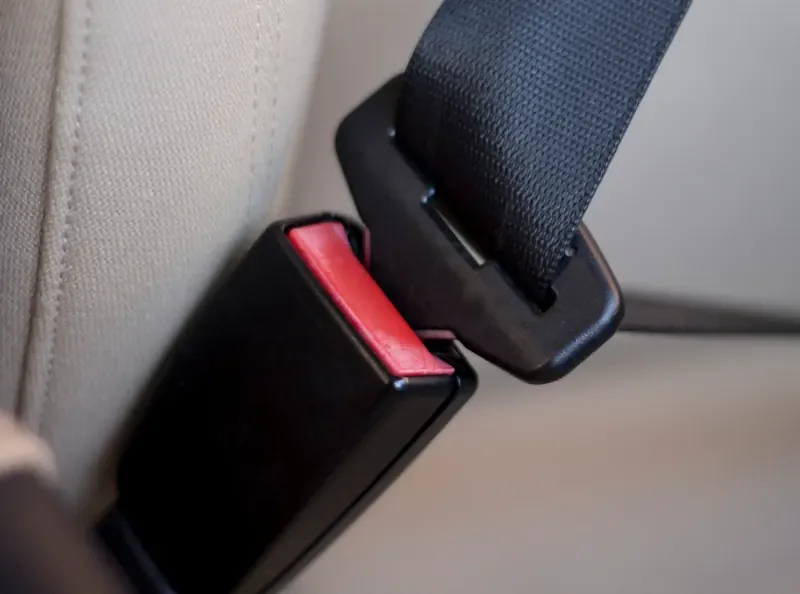
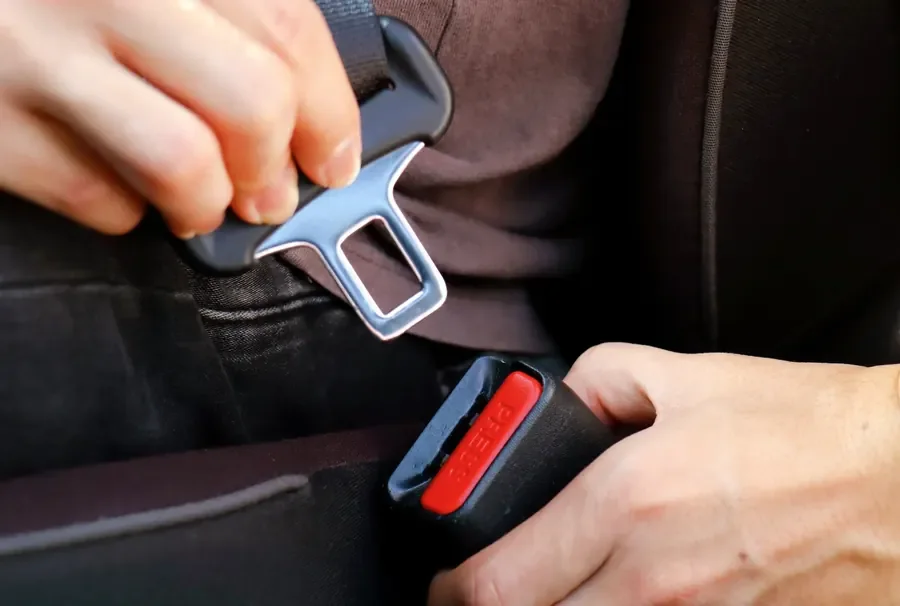
The buckle assembly is where the restraint is actually made and broken, and it is the part the occupant interacts with every single journey. It comprises the receiver — the housing containing the latch mechanism and release button — the stalk or cable that mounts it to the vehicle, and the latch plate or tongue that engages into it.
These components see more mechanical cycles than anything else in the assembly. Webbing degrades slowly through abrasion and UV exposure; a buckle wears through repeated latching, and the failure mode is different. A buckle that has begun to release under light pressure, that requires several attempts to latch, or that no longer produces a clean positive click has a mechanical problem and should be taken out of service rather than lived with.
The most important thing to understand about this category is that the tongue and the receiver are a matched pair. The latch plate profile — its thickness, its width, and the exact geometry of the locking aperture — has to correspond to the mechanism inside the receiver. A tongue from one assembly may physically enter a receiver from another and appear to latch while not being properly retained. That is a genuinely dangerous outcome, and it is the reason we will not supply halves from different assemblies as a matched pair.
Many modern buckles also carry an electrical switch reporting buckle status to the vehicle for the seat belt reminder system. If the position you are replacing has wiring running to the buckle, the replacement needs the same provision — otherwise a fault will be logged even if the mechanical function is perfect.
Typical applications
Where this category is used
-
Buckle replacement on a serviceable belt
Where webbing and retractor are in good condition but the buckle no longer latches or releases cleanly.
-
High-cycle commercial applications
Vehicles with frequent occupant turnover, where buckle wear appears well before webbing wear.
-
Latch plate replacement
Where the tongue is damaged or worn — supplied matched to the receiver rather than as a standalone item.
-
Positions with buckle switches
Replacements that must maintain the electrical connection to the seat belt reminder system.
Selection
What decides which one you need
Work through these before ordering. Where you cannot answer one of them, that is exactly the sort of thing to put in an enquiry rather than to estimate.
| Consideration | Why it matters |
|---|---|
| Tongue and receiver compatibility | The single most important criterion. Profile, thickness and locking aperture geometry must correspond exactly. |
| Stalk length and type | Rigid stalk, flexible cable or webbing-mounted, and the length required to place the receiver where the occupant can reach it. |
| Mounting arrangement | How the stalk anchors: bolt size, thread, orientation and any spacers or bushes the original installation used. |
| Release button type and position | Affects ease of release and how the buckle sits relative to the seat cushion and console. |
| Electrical provision | Whether a buckle-status switch is required, along with connector type and pin count. |
| Housing size and clearance | The receiver has to sit clear of the seat cushion, trim and any centre console at full seat travel. |
Questions
About seat belt buckles & receivers
More questions covering replacement, fitment and bulk supply are answered on the FAQs page.
No. The tongue and receiver are a matched pair, and a mismatched tongue can enter a receiver and appear to latch without being properly retained. This is one of the few areas where we will decline to supply what is asked for, because the failure mode is hidden until it matters.
Treat it as a fault. Inconsistent latching indicates wear or contamination in the mechanism, and a buckle that latches unreliably may also release unreliably. Have it inspected by a qualified technician rather than working around it.
Often not. If the webbing is undamaged and the retractor works correctly, replacing the buckle assembly alone is frequently appropriate — provided the replacement is matched to the existing latch plate. Send photographs of both halves and we can advise.
Related categories
Often looked at alongside this
Three-Point Seat Belts
A diagonal shoulder section and a lap section anchored at three points — the standard occupant restraint in modern passenger vehicles, and the category we are asked for most often.
ViewRetractable Seat Belts
Self-retracting assemblies that manage slack automatically, hold the webbing against the occupant in normal driving, and stow it out of the way when unbuckled.
ViewLap (Two-Point) Seat Belts
Two-point belts restraining across the pelvis alone — still specified wherever a shoulder anchorage is unavailable or inappropriate to the seat design.
ViewEnquiries
Tell us the vehicle and the seat position
Send the make, model, year and position, plus photographs of the existing installation. That is normally enough for us to identify what you need or tell you what else to check.
Share the vehicle, the seat position and the belt configuration you are replacing or specifying, and we will come back with the options that fit.